





News Essay Structure Writing an academic essay means fashioning a coherent set of ideas into an argument. Because essays are essentially linear—they offer one idea at a time—they must present their ideas in the order that makes most sense to a reader. Successfully structuring an essay means attending to a reader's logic. The focus of such an essay predicts its structure. It dictates the information readers need to know and the order in which they need to receive it. Thus your essay's structure is necessarily unique to the main claim you're making. Although there are guidelines for constructing certain classic essay types (e.g., comparative analysis), there are no set formula. Answering Questions: The Parts of an Essay A typical essay contains many different kinds of information, often located in specialized parts or sections. Even short essays perform several different operations: introducing the argument, analyzing data, raising counterarguments, concluding. Introductions and conclusions have fixed places, but other parts don't. Counterargument, for example, may appear within a paragraph, as a free-standing section, as part of the beginning, or before the ending. Background material (historical context or biographical information, a summary of relevant theory or criticism, the definition of a key term) often appears at the beginning of the essay, between the introduction and the first analytical section, but might also appear near the beginning of the specific section to which it's relevant. It's helpful to think of the different essay sections as answering a series of questions your reader might ask when encountering your thesis. (Readers should have questions. If they don't, your thesis is most likely simply an observation of fact, not an arguable claim.) "What?" The first question to anticipate from a reader is "what": What evidence shows that the phenomenon described by your thesis is true? To answer the question you must examine your evidence, thus demonstrating the truth of your claim. This "what" or "demonstration" section comes early in the essay, often directly after the introduction. Since you're essentially reporting what you've observed, this is the part you might have most to say about when you first start writing. But be forewarned: it shouldn't take up much more than a third (often much less) of your finished essay. If it does, the essay will lack balance and may read as mere summary or description.
An Overview of Aluminum Strips
Technology updated 3 years ago

An Overview of Aluminum Strips

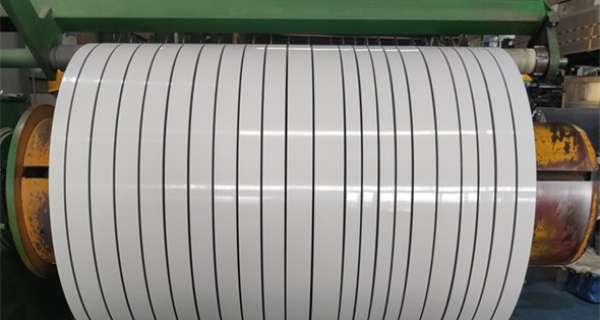
Aluminum strip has different types and colors for demands.

An Overview of Aluminum Strips

Aluminum strips are thin, flat pieces of aluminum that are typically less than 0.2 inches (5 mm) thick and between 0.5 to 24 inches (13 to 610 mm) wide. They are commonly used in a wide range of industrial applications due to their excellent strength-to-weight ratio, high thermal and electrical conductivity, and corrosion resistance.

Aluminum strips are typically made from pure aluminum or aluminum alloys that have been extruded, rolled, or cast into thin sheets and then cut into strips of the desired width. The most commonly used aluminum alloys for strips include 1000 series, 3000 series, and 5000 series alloys.

Aluminum strips have a wide range of uses, including:

Electrical conductors: Aluminum strips are commonly used as electrical conductors in a variety of applications due to their high conductivity and low weight.

Heat sinks: Aluminum strips are often used as heat sinks in electronic devices and appliances due to their excellent thermal conductivity.

Packaging: Aluminum strips are used in the manufacture of packaging materials such as foil and cans due to their corrosion resistance and ability to be easily formed into a variety of shapes.

Construction: Aluminum strips are used in the construction industry for various purposes such as roof flashing, gutters, and siding due to their lightweight and durability.

Automotive industry: Aluminum strips are also used in the automotive industry for various applications such as trim, body panels, and heat shields.

Overall, aluminum strips are a versatile material that are widely used in a variety of industries due to their unique properties and excellent performance characteristics.

0
1
0
0
0
0
0
0
0
0 Comments

Subscribe to our email newsletter & receive updates right in your inbox.

Follow Us on Facebook