






In industries where large volumes of bulk materials need to be transported efficiently, drag chain conveyors stand out as a reliable and versatile solution. Designed to handle heavy loads across various applications, these conveyors use robust chains to move materials within an enclosed trough or casing. Their efficiency, durability, and adaptability make them a popular choice in industries like agriculture, mining, cement, and power generation.
What Are Drag Chain Conveyors?
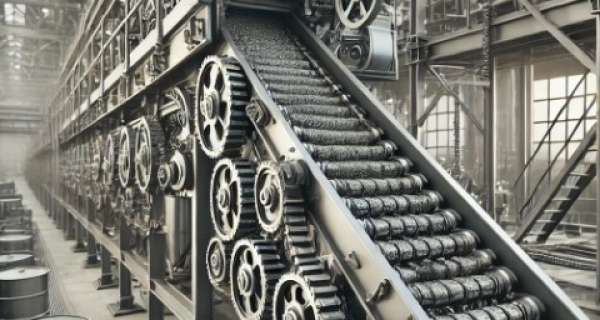
Drag chain conveyors are mechanical systems that use one or more chains to drag bulk materials through an enclosed path. The chains are fitted with flights or attachments that “drag” materials, making them ideal for horizontal, inclined, or even vertical movement of goods. Unlike traditional conveyor belts, drag chain conveyors excel in handling abrasive, hot, or heavy materials that would be challenging for other systems.
Key Features of Drag Chain Conveyors
1. Enclosed Design
The enclosed structure minimises material spillage and protects materials from external contamination, making these conveyors ideal for sensitive or hazardous materials.
2. High Capacity
Drag chain conveyors can move large volumes of material efficiently, making them suitable for heavy-duty applications.
3. Versatility
These systems can be customised to handle a wide variety of materials, including powders, granules, grains, and aggregates.
4. Durable Construction
Built with wear-resistant materials, drag chain conveyors are designed to withstand extreme conditions, including high temperatures and abrasive materials.
5. Energy Efficiency
Drag chain conveyors require less energy compared to pneumatic or other mechanical systems, reducing operational costs.
How Drag Chain Conveyors Work
· The chain is driven by a motor and sprockets, moving through a trough or casing.
· Flights attached to the chain push or "drag" materials along the conveyor’s length.
· Depending on the design, materials can be moved horizontally, vertically, or at an incline.
Applications of Drag Chain Conveyors
1. Agriculture
o Transporting grains, seeds, or animal feed efficiently within processing plants or storage facilities.
2. Mining and Minerals
o Moving coal, ore, and other bulk materials in harsh, abrasive environments.
3. Cement and Construction
o Handling raw materials like limestone, sand, and cement powder in production facilities.
4. Power Plants
o Transporting biomass, coal, or ash for energy generation processes.
5. Food Processing
o Moving bulk food products like flour, sugar, or spices in hygienic environments.
6. Recycling
o Conveying scrap materials, waste, or recyclable goods for sorting and processing.
Summing up, drag chain conveyors are a game-changer for industries that require efficient and reliable bulk material handling. Whether you’re in mining, agriculture, or food processing, investing in a well-designed drag chain conveyor ensures smoother operations, lower maintenance costs, and higher productivity—keeping your business moving forward!






























0 تعليقات